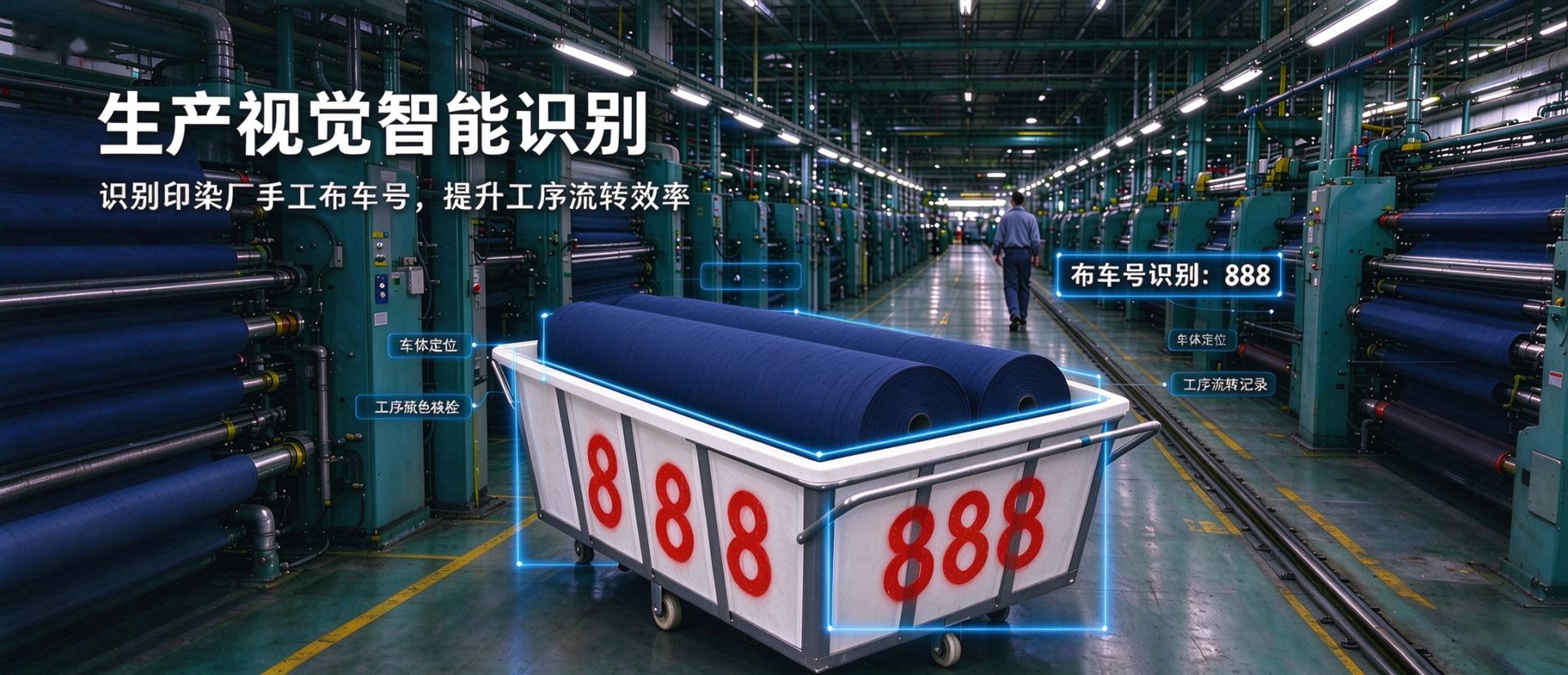
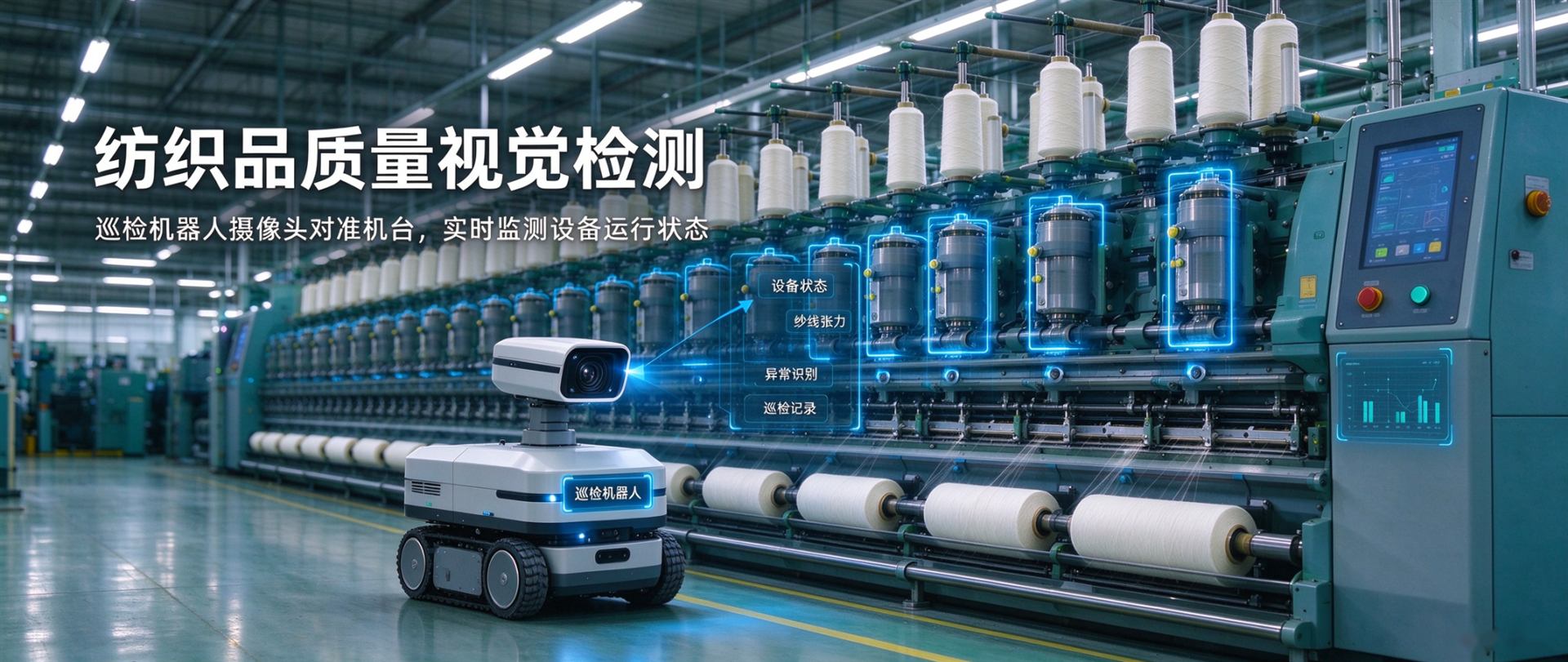
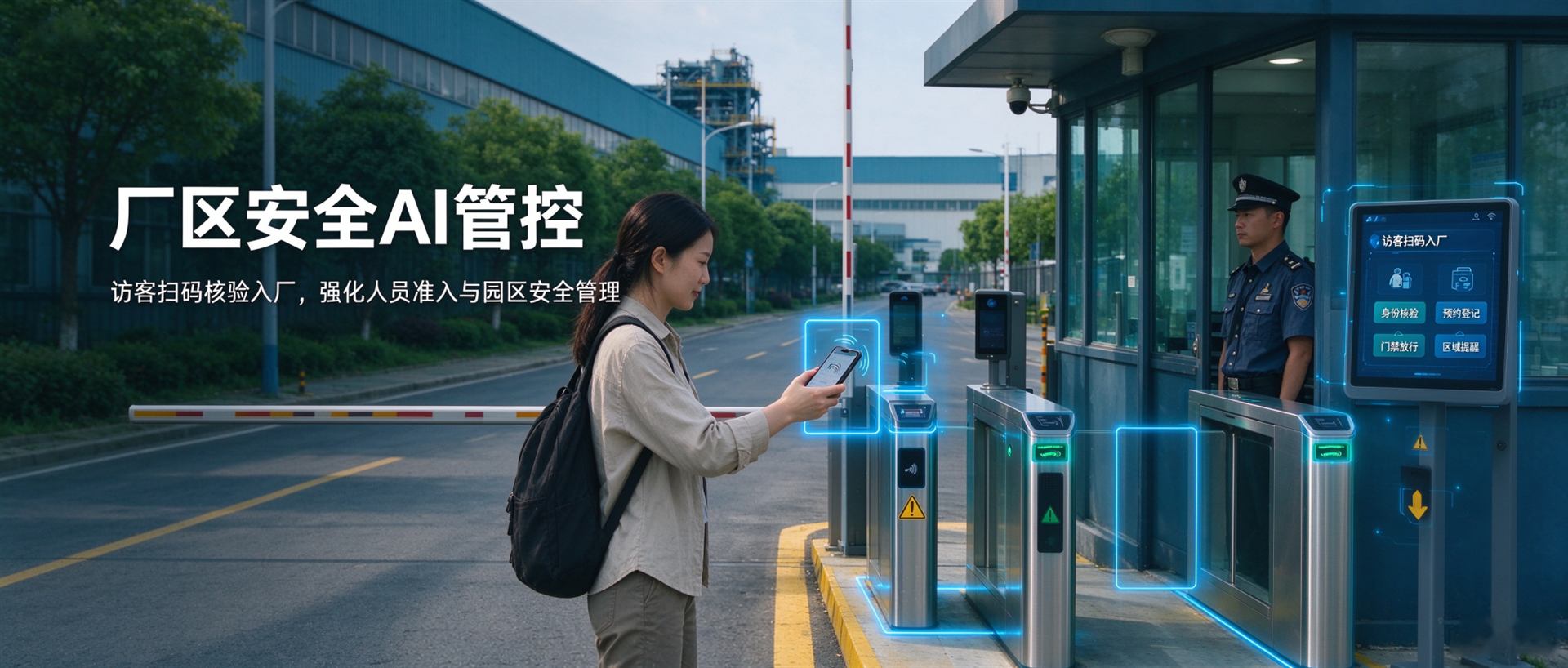
Specializing in textile printing and dyeing scenarios, we leverage machine vision and AI deep learning to deliver adaptive, iterable end-to-end custom vision services tailored to on-site working conditions. We adopt a pilot-first approach with controllable risks, support flexible local deployment, and feature native integration with MES, WMS, WCS and AMR robot systems.
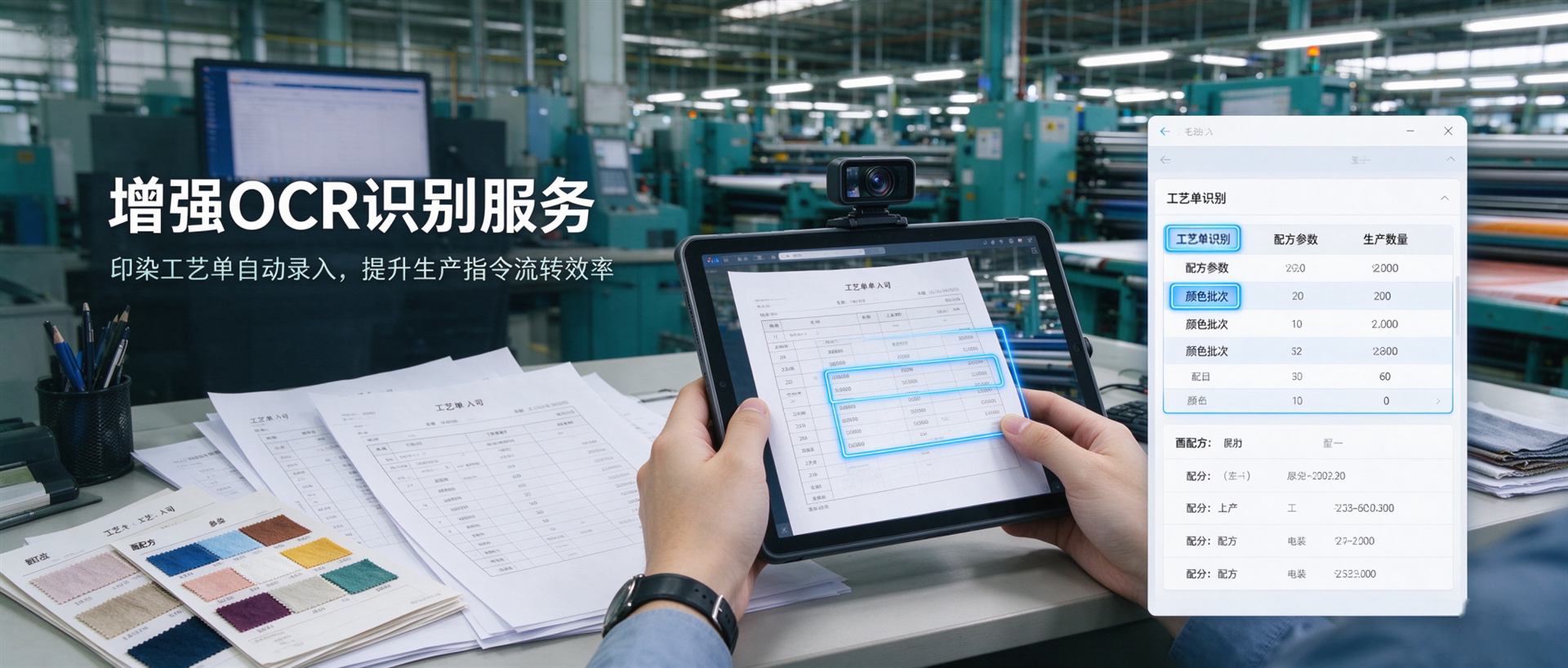
"Enhanced OCR Recognition" is not a single function. Based on standard OCR, it improves recognition accuracy, stability and availability via image enhancement, model optimization, post-processing error correction and domain knowledge constraints.
It converts on-site unstructured information (labels, cards, gauges, process sheets, packages, equipment status) into computable data and forms a closed-loop business with ERP/MES/WMS. The textile and dyeing industry has many such information silos, which can be well addressed by OCR+.
"Read characters in the image"
"Read correctly & fully into structured data under blur, glare, tilt, dirt, handwriting and complex layouts"
Improve the efficiency of cross-border order processing and facilitate subsequent customer data accumulation and intelligent retrieval.
Automatic Data Entry for Supplier Incoming Material Documents: OCR⁺ identifies supplier delivery notes, quality inspection reports, composition test reports and other documents. It extracts material codes, batch numbers, inspection items, measured values and judgment conclusions. Value: Streamlines incoming inspection and warehousing processes, and reduces repetitive manual data entry by clerks.
Prevent material picking errors and reduce inventory discrepancies.
Cone stickers are mostly small labels prone to contamination and handwritten remarks. It identifies yarn count, composition, batch numbers, etc., and imports structured data into ERP to avoid wrong materials.
Identify chemical name, CAS number, concentration, batch and expiry date; automatically bind hazardous chemical ledgers during warehousing.
Identify width, fabric weight, batch number, roll length and order number, binding roll numbers with physical fabrics.
Paper-based Process Sheets in Workshop & Networking for Legacy Devices without Communication Protocols
Recognize order number, fabric type, dyeing formula, liquor ratio and machine ID, verify formula logic and issue data to MES.
Camera captures the display screen, and OCR+ reads temperature, fabric speed, tension, dye bath number, etc.
Identify dye bath number, process, machine and remarks to track fabric position.
Automatically verify against MES work orders.
Structure handwritten fault descriptions and automatically generate maintenance records.
Inspection Report OCR+ & Mending Annotation Text Recognition
Recognize sample ID, color fastness, tensile strength, shrinkage rate, etc., and populate the quality inspection database.
Recognize handwritten defect remarks and associate them with fabric inspection images.
OCR+ Recognition for High Rack Number and Bin Location Code
Recognize order number, roll number, length, grammage and customer name for automatic sorting and verification.
Mixed Chinese-English recognition of order number, package quantity and destination.
Recognize rack number, bin location code, roll label and pallet label for automatic inventory checking.
Networking of Legacy Water, Power & Gas Meters
Recognize pH, COD and chemical dosing quantity to generate electronic logs.
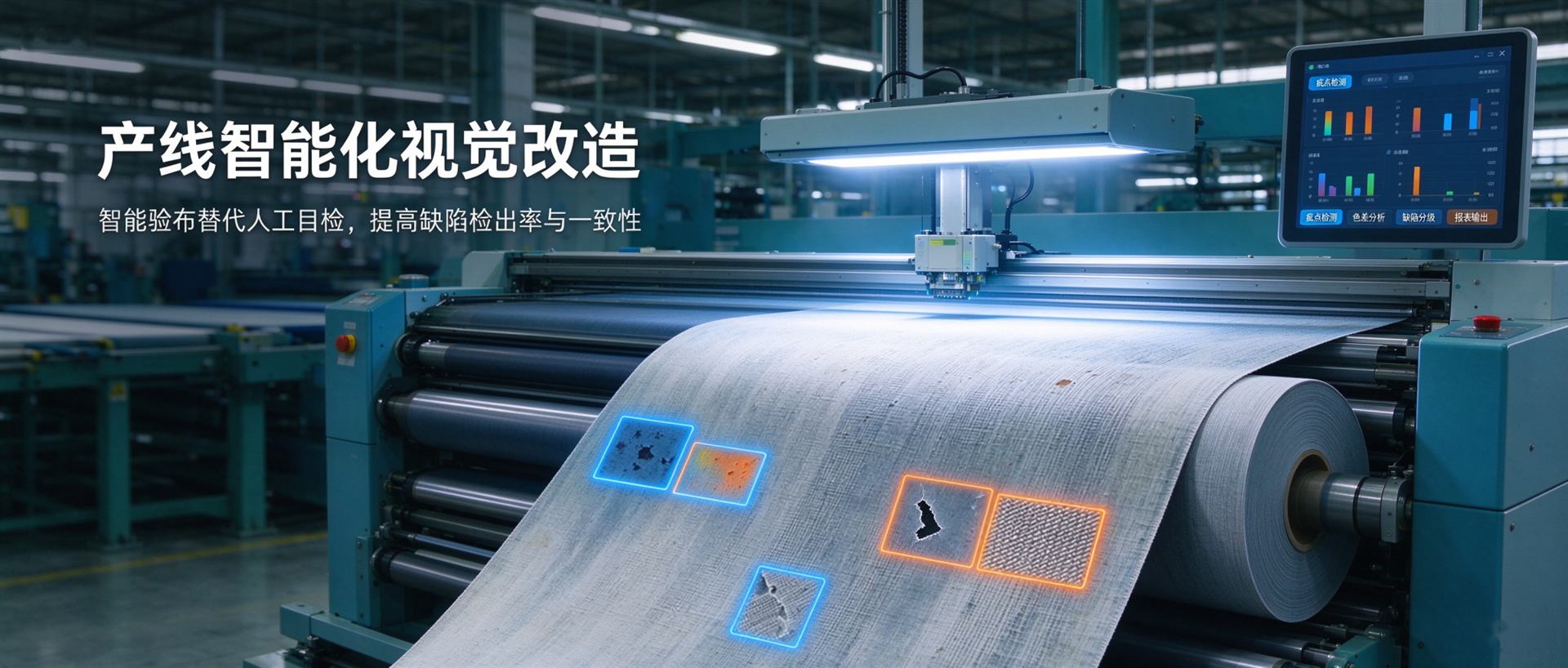
We provide in-situ modular retrofit solutions. Three options are available: single workstation, segmented production line and full plant integration. Achieve intelligent production line upgrade rapidly with limited investment.
We specialize in full-line AI vision intelligent retrofit services for textile dyeing and finishing, covering intelligent inspection across all processes: yarn, grey fabric, dyeing, printing, setting and finished products. Modular retrofitting is compatible with various legacy dyeing & finishing equipment. Off-peak construction minimizes production downtime. You may book free on-site surveys by our engineers for customized upgrade solutions.
Custom detection algorithms for cotton, linen, silk, chemical fiber and elastic fabrics. Fast iteration for new fabric types with low false detection and high recognition accuracy. It can connect with production line vision hardware and textile printing & dyeing ERP, reducing rework and manual quality inspection costs.
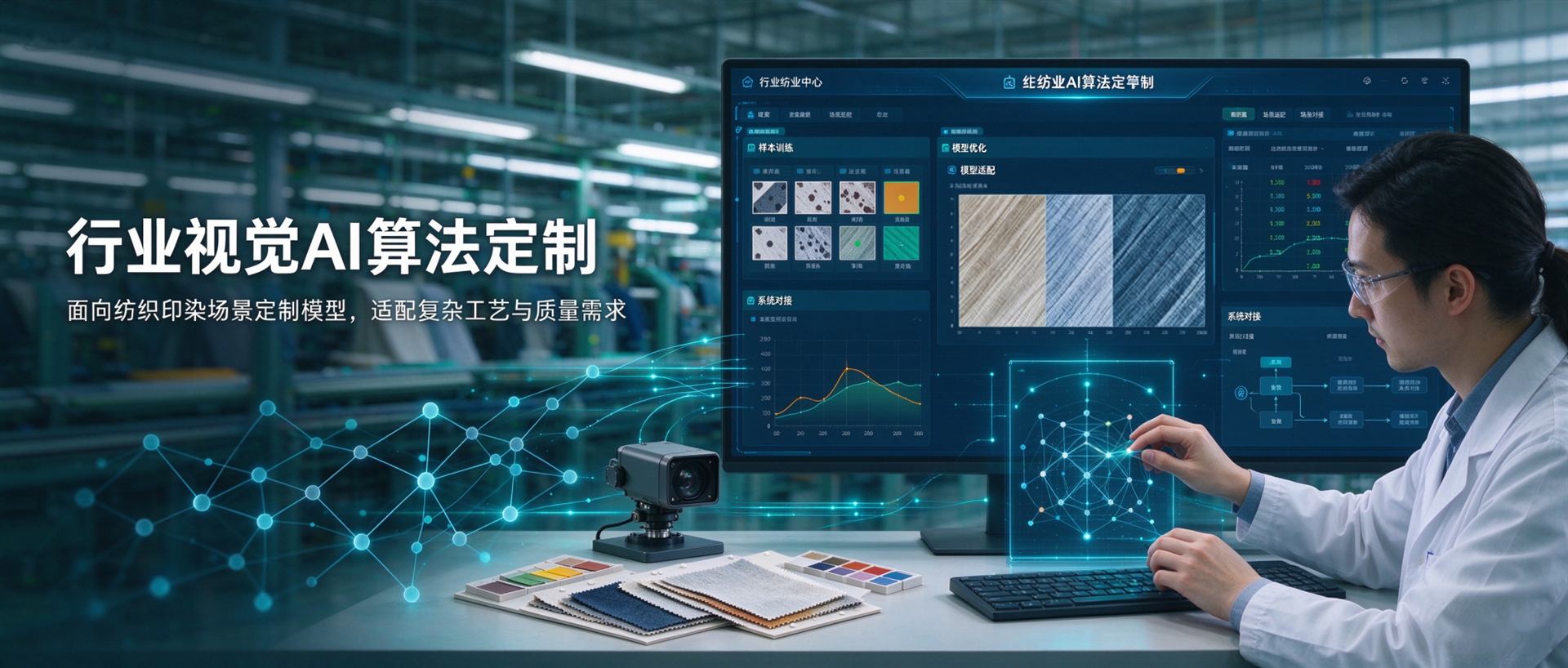
We provide integrated services including AI vision algorithm customization, model training, interface development and system integration for all textile processes. Rapid iteration of dedicated detection models is available with only a small number of fabric samples.
We specialize in the customized development of AI vision algorithms for the full textile dyeing and finishing workflow, covering all scenarios of grey fabric, dyeing, printing and finished fabric inspection. We build dedicated deep learning models for dark-colored, elastic and complex-pattern fabrics, enabling fast training with limited samples, low false detection and high precision. Algorithm licensing and secondary development are supported. Seamless integration with industrial cameras, edge hosts and textile ERP/MES systems is available, together with lifelong model iteration services. You may book free fabric sample testing.
Book a free on-site survey and get a tailored vision plan.
 Scan for business WeChat
(+86) 180 5879 0950