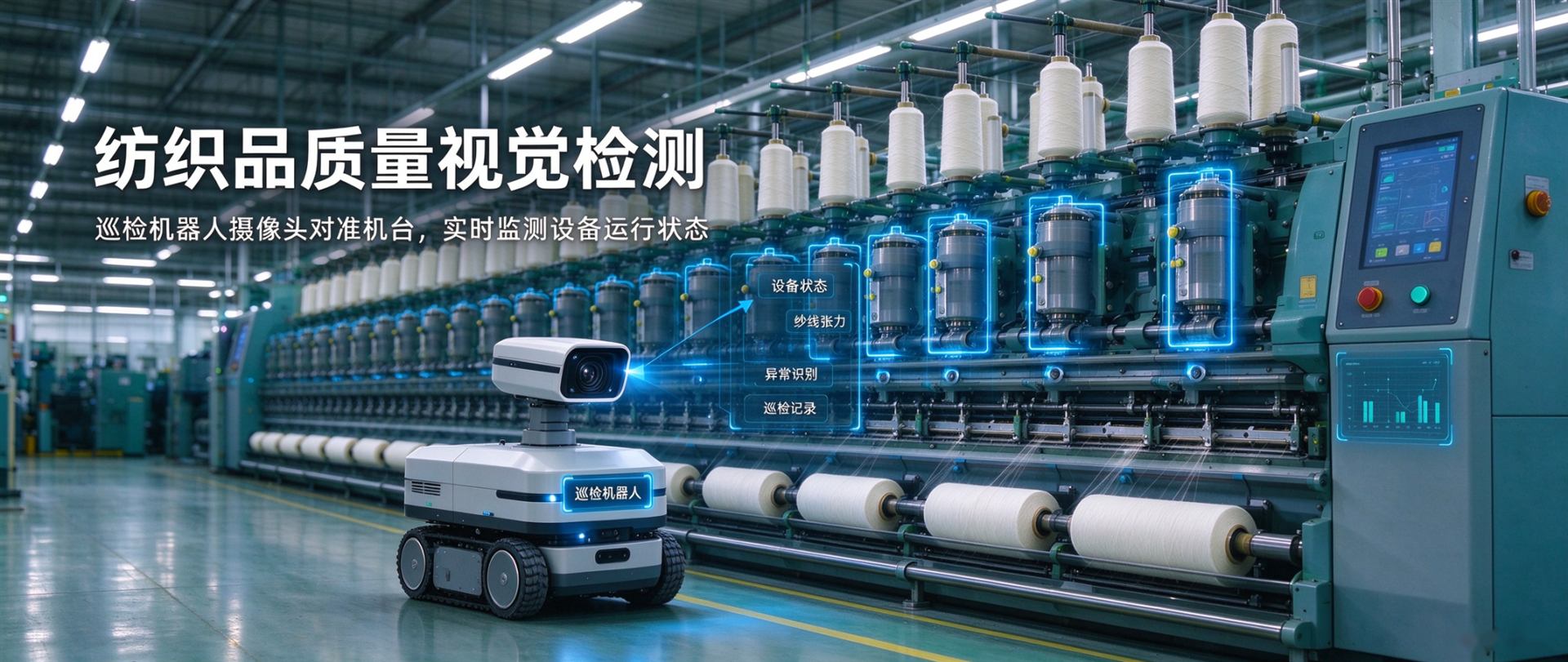
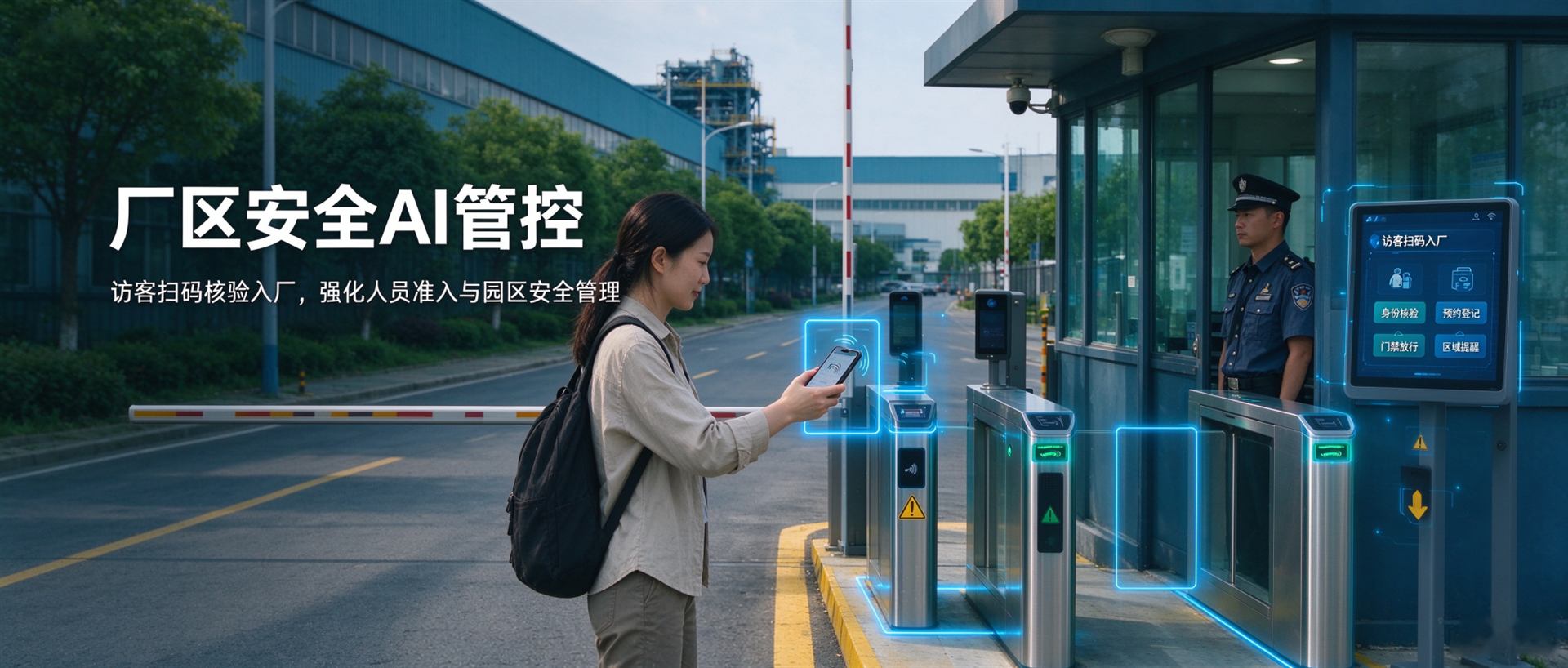
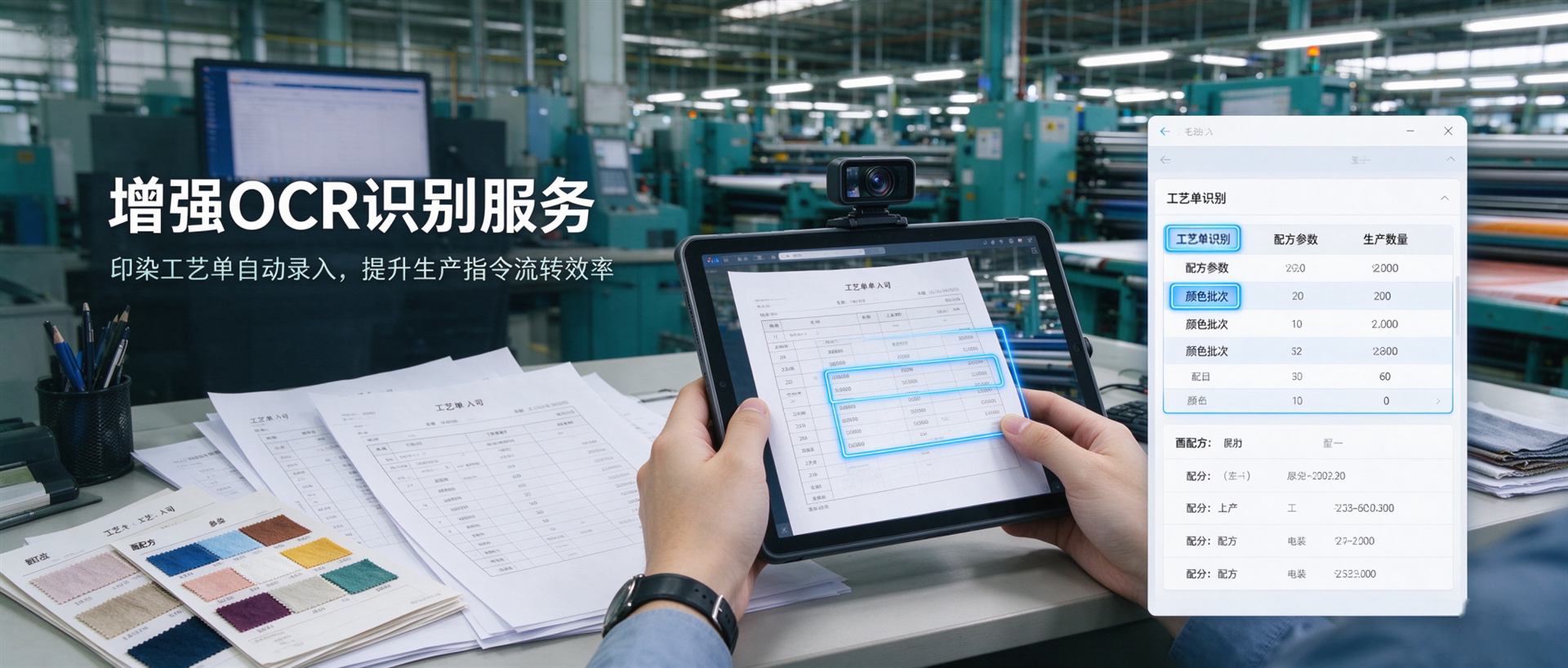
Build the VisionEye system, mainly powered by intelligent IPC and industrial cameras. Integrated with positioning and AI event analysis, it realizes visualization, automatic alerts and data warehousing for personnel, cloth trolleys, storage locations, equipment and quality. Connected with ERP/MES, it enables digital visualization and management of workshops.
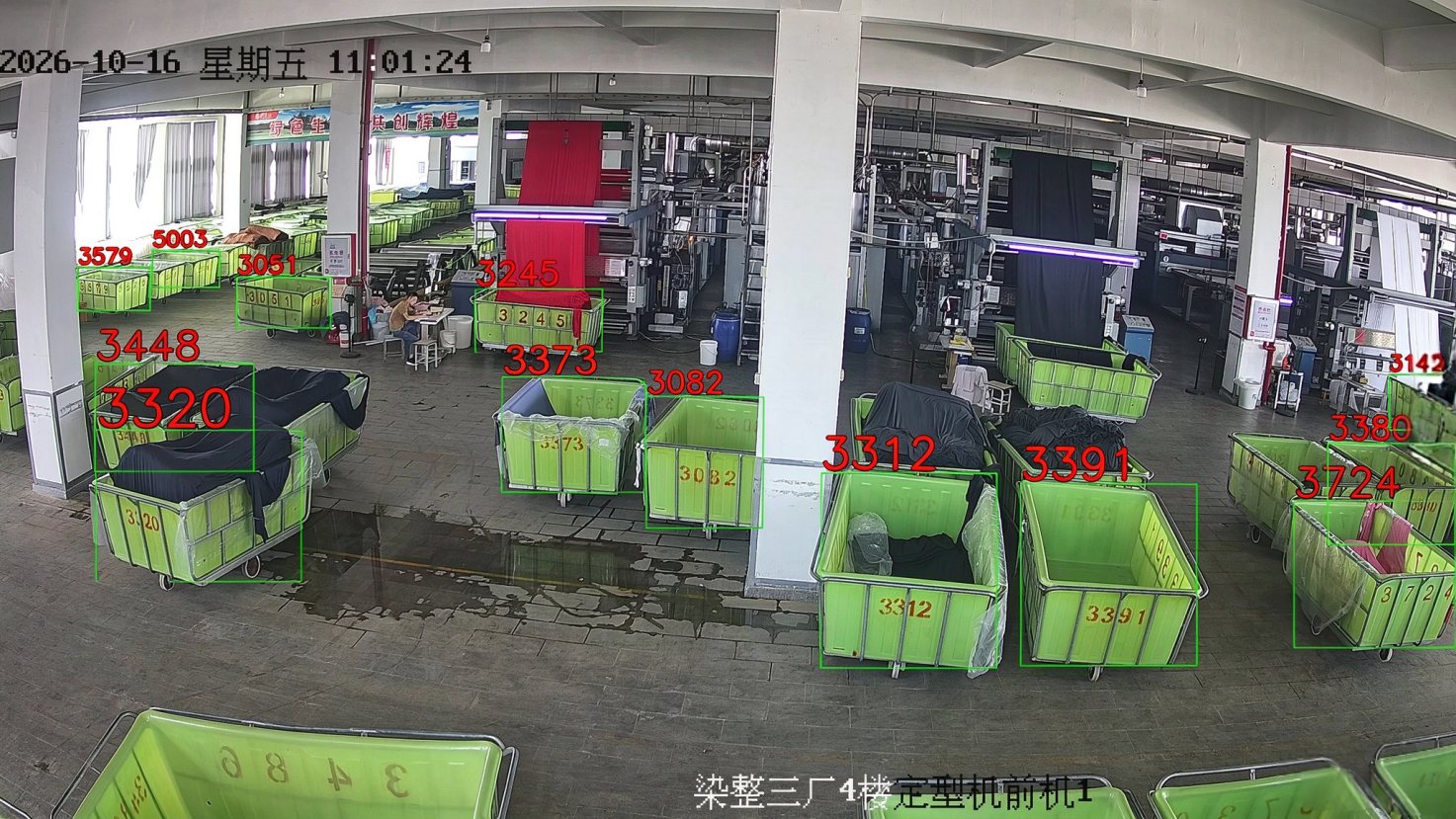
Cameras detect trolleys in production in real time — ID, empty/full status and location.And we have overcome the challenge of locating trolleys in multi-layer dense scenarios such as cloth waiting areas.
The printing and dyeing workshop has a large number of cloth trolleys, fast process flow, and frequent replacement of cloth trolleys. Whether the cloth trolleys arrive at the next waiting area at the correct time can easily cause buck-passing. Traditionally, relying on manual on-site search for cloth trolleys is inefficient, which not only increases the workload of employees, but also causes equipment to idle and energy waste, dragging down the efficiency of material circulation in the workshop.
It is time for VisionEye: cameras detect trolley ID, empty/full status and location in real time.
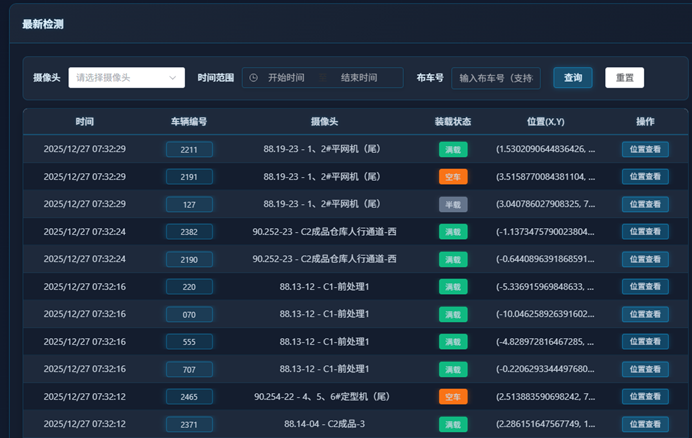
Traditional MES requires machine operators to enter the start and end time of each work order in real time. Inaccurate operations will introduce errors in work order output and energy consumption data, distort assessment metrics, and impair the execution performance of the MES system.
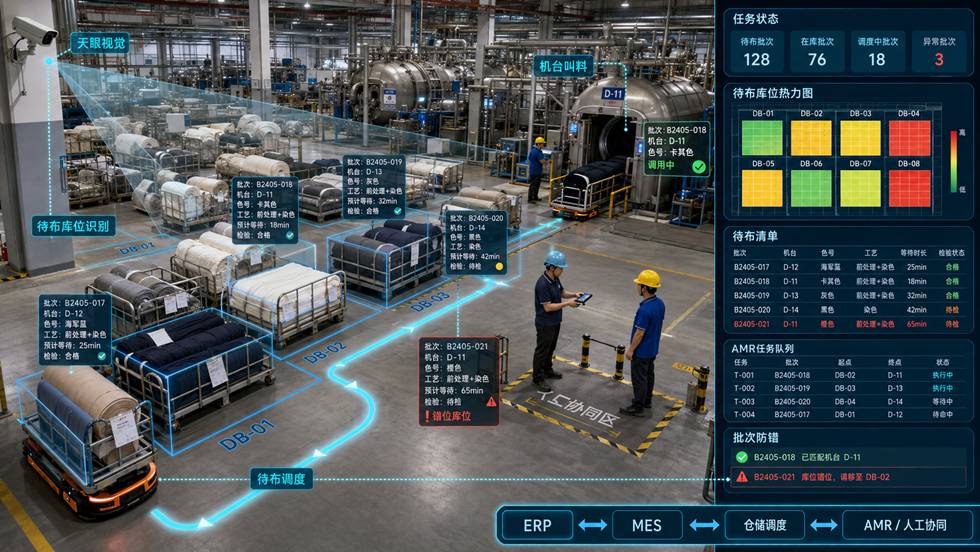
VisionEye identifies storage locations via vision, connects to ERP, and seamlessly interfaces with the AMR automatic handling system to provide real-time status of occupied and vacant storage locations.
Materials move in and out frequently, and workers may relocate carts casually. As a result, the actual location positions are often out of sync with ERP records.
AMRs, forklifts and manual operations lack a unified storage location collaboration platform, and AMRs require manual storage location binding.
It identifies locations via vision, integrates with ERP/MES, and seamlessly interfaces with the AMR automatic handling system. It provides real-time occupied and vacant storage location status, greatly improving on-site usability and achieving true synchronization between physical material flow and information flow within the factory.
Manual on-site registration of fabric inbound and outbound shipments relies on manual paper-based recording. The entry efficiency is low, and omissions or errors are likely to occur. Registered data cannot be synchronized to ERP/MES in real time and must be re-entered into the system. Errors are difficult to trace, and disputes may easily arise with customers or suppliers.
With continuous conveyor operation and operator fatigue, over-delivery, missing delivery and wrong delivery are likely to occur, resulting in deviations in shipped quantities.
The traditional manual paper-based registration and manual order entry lack on-site image retention. No valid evidence is available when reconciliation discrepancies or quantity disputes with customers arise.
To address the above pain points, an AI vision intelligent counting solution is adopted to replace manual visual monitoring. It enables automatic fabric identification, accurate counting, exception early warning, image archiving and automatic data upload. This effectively solves problems such as manual recording errors and omissions, non-traceable data and non-standardized management, and helps improve customer service levels.
Book a free on-site survey and get a tailored vision plan.
 Scan for business WeChat
(+86) 180 5879 0950